
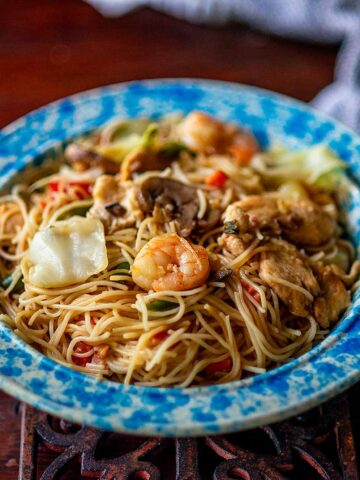
Quick Take: This Pancit Bihon recipe is a classic Filipino noodle dish made with thin rice vermicelli, tender chicken, shrimp, fresh vegetables, and a savory sauce seasoned with soy sauce, oyster sauce, and chicken bouillon. The dry noodles cook directly in the sauce, soaking up all that flavor without needing to be soaked beforehand.
When I first moved to Texas, I was introduced to two incredible cuisines: Texas BBQ and Filipino food. A Filipino friend introduced me to this exact version of Pancit Bihon, and I've been making it ever since. It's one of those recipes that reminds me how much good food can bring people together.
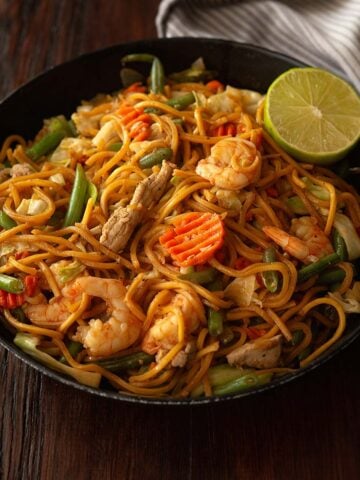
If you enjoy this recipe, be sure to try my Pancit Canton, which uses thicker egg noodles, or Chicken Mei Fun, another delicious rice noodle dish. And if you're planning a Filipino-inspired dinner, my Dynamite Lumpia makes an excellent appetizer.

Jump to:
Pancit Bihon Ingredients

Pancit Bihon Noodle: The noodles are the most important parts of a Pancit recipe. For Bihon, use Filipino Noodles labeled Bihon or Rice Vermicelli Noodles. These are extremely thin rice noodles and can be found in most Asian markets, or you can order them online.
Meat: Frozen chicken breast sliced very thinly. Shrimp is also very commonly found in Pancit recipes. However, it is not a must.
Vegetables: Pancit recipes vary quite a bit, so you can definitely be creative here. I used fresh green beans or bean sprouts, carrots, cabbage, onion, and garlic.
Sauce: For the Pancit Bihon sauce, I use Chicken Bouillon Powder, Light Soy Sauce, Dark Soy Sauce, Oyster Sauce, Black Pepper, Salt, Accent and Water. Mix it all together, and you've got a delicious Pancit sauce.
See the recipe card below for full information on ingredients and quantities.
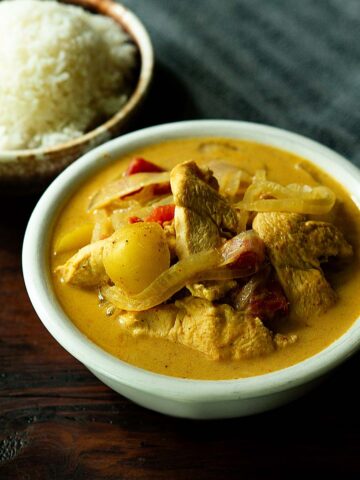
Looking for other excellent Wok Recipes? Check out this Yellow Thai Curry Recipe!
Step-by-Step Instructions

Step 1: Prepare all of the Ingredients
Begin by combining all of your sauce ingredients in a mixing bowl.
Give everything a good whisk until it's evenly combined, then set the sauce aside.
Now let's get the rest of our ingredients ready.
Start by slicing the chicken into thin, evenly sized strips.
Keeping the pieces about the same size helps them cook evenly once they hit the wok.
Next, prepare the vegetables.
If you're using larger green beans, go ahead and cut those in half.
Shred the carrots, or you can save yourself some time and buy them already shredded.
Dice the onion, and then cut the cabbage into bite-sized pieces.
And one thing I want to point out about the cabbage is that I'm not shredding it into thin strips.
I actually prefer keeping it in larger chunks.
That way, even after it cooks down, the cabbage still has some texture instead of completely disappearing into the noodles.
Once everything is chopped, combine the carrots, onions, and green beans in one bowl.
Keep the cabbage in a separate bowl since we'll be adding it a little later.

Step 2: Cook the Chicken and Shrimp
Heat a large wok over medium-high heat and add a little cooking oil.
I'm using olive oil, but stir-fry oil works great for this recipe as well.
Once the oil is hot, add the sliced chicken.
Season the chicken with salt and black pepper, then stir-fry until it's cooked through.
Since we've cut the chicken into thin strips, it shouldn't take too long.
Once the chicken is fully cooked, remove it from the wok and transfer it to a mixing bowl.
Now add a little more oil if necessary, and add the shrimp.
Cook the shrimp until they're pink, opaque, and cooked through.
Then remove them from the wok and add them to the bowl with the chicken.
I like cooking the chicken and shrimp separately because they don't take the same amount of time to cook.
This way, we can make sure both are cooked properly without leaving the shrimp in the wok too long and making them rubbery.

Step 3: Cook the Vegetables
Add the green beans, onions, and carrots to the wok.
Sauté everything until the vegetables begin to soften and the onions start turning translucent.
Once the onions have softened, stir in the fresh minced garlic.
Continue cooking just until the garlic becomes fragrant.
Now we're going to start adding the cabbage.
And just like I mentioned earlier, I'm keeping these pieces a little larger because I want some texture in the finished dish.
Begin adding the cabbage in batches, stirring each batch into the vegetables already in the wok.
As the cabbage cooks, it'll begin to soften and shrink down, making room for more.
Continue adding the cabbage until everything has been incorporated.
And if your wok has a lid, you can use it here to help speed things up.
Just cover the wok for a little while and allow the cabbage to steam.
But don't let it cook down completely.
We're looking for softened cabbage that still has a little bite to it.
Remember, these vegetables are going back into the wok with the noodles later, so we don't need to take them too far right now.
Once all the vegetables are cooked to your liking, transfer them to a large mixing bowl and set them aside.
Step 4: Cook the Noodles in the Sauce
Pour the sauce we prepared earlier directly into the wok.
Bring the sauce to a boil, then begin adding the dry Pancit Bihon noodles.
And here's one of the most important parts of this recipe.
We're not boiling these noodles separately in plain water.
We're cooking them directly in the sauce.
As the noodles soften, they'll begin absorbing all that flavor.
And that's exactly what we want.
Use a pair of small tongs to gently move the noodles around, separating them as they begin to soften.
At first, they may be a little stiff and difficult to work with.
But as they absorb the sauce, they'll become much more flexible and easier to separate.
Now, something else I like to do is grab a pair of kitchen shears and cut the noodles in half.
You certainly don't have to do this, but I find it makes everything a whole lot easier.
Shorter noodles are easier to mix with all the chicken, shrimp, and vegetables we're adding back in.
And personally, I think they're a little easier to eat that way, too.
Continue gently stirring and separating the noodles until they're tender and have absorbed most of the sauce.
You don't want to rush this part or aggressively stir the noodles while they're still stiff.
Just give them time to soften and absorb that liquid. Normally about 10 minutes.
And keep an eye on their texture as they cook.
We want tender noodles that are easy to separate, not noodles that have cooked so long they've become mushy.
Once the noodles are cooked through and most of the sauce has been absorbed, it's time to bring everything together.

Step 5: Combine and Serve
Begin by adding the cooked chicken and shrimp back into the wok.
Gently stir them into the noodles until they're evenly distributed.
Next, start adding the cooked vegetables in batches.
I find this much easier than dumping everything back into the wok at once.
Add some vegetables, gently fold them into the noodles, and then add some more.
Continue working in batches until all the cabbage, carrots, green beans, and onions are evenly incorporated.
And this is where shortening those noodles earlier really comes in handy.
It makes it much easier to fold everything together without having one giant bundle of noodles wrapped around your tongs.
Once everything is combined and heated through, turn off the heat.
And that's all there is to it.
You've got savory rice noodles that have soaked up all that sauce, tender chicken and shrimp, and plenty of vegetables that still have some texture.
Expert Tips
Cook the Noodles Directly in the Sauce: There's no need to soak the rice vermicelli before cooking. Adding the dry bihon noodles directly to the seasoned cooking liquid allows them to absorb the flavors of the soy sauce, oyster sauce, and chicken bouillon as they soften.
Use the Right Noodles: Look for thin Filipino rice vermicelli labeled Bihon. These noodles are different from the thicker rice sticks used in dishes like Pad Thai. Using the correct noodles gives Pancit Bihon its characteristic light texture.
Keep an Eye on the Liquid: Rice vermicelli absorbs liquid quickly, especially as it begins to soften. Make sure the noodles have enough sauce to cook evenly, adding a small splash of hot water if the wok becomes too dry before the noodles are tender. Avoid adding too much liquid at once, or the finished dish may become watery.
Don't Overcook the Vegetables: The cabbage, carrots, and green beans should be tender but still have a little texture. They'll continue cooking briefly after the sauce and noodles are added, so there's no need to cook them until completely soft beforehand.
Use a Large Wok or Deep Skillet: Pancit Bihon makes a generous batch, and the noodles take up quite a bit of room before they soften. A large wok makes it easier to toss everything together without spilling ingredients over the sides.
Separate the Noodles Gently: As the dry noodles absorb the sauce, they'll become flexible and easier to separate. Use tongs or two large utensils to gently lift and toss them with the chicken, shrimp, and vegetables. Avoid aggressively stirring the noodles while they're still stiff because they can break.
Adjust the Seasoning at the End: Soy sauce, oyster sauce, and chicken bouillon all contribute saltiness. Taste the finished Pancit Bihon before adding additional salt. A squeeze of fresh lime or lemon juice just before serving also helps balance the savory flavors.
Don't Overcook the Shrimp: Shrimp cooks quickly and can become rubbery if left over high heat too long. Cook it just until opaque and cooked through, and avoid unnecessary additional cooking while finishing the noodles.
What to Serve With Pancit Bihon
Pancit Bihon is hearty enough to serve as a complete meal, especially with the chicken, shrimp, and vegetables already mixed into the noodles. But it's also a popular dish for gatherings and celebrations, where it's often served alongside other Filipino favorites.
For an appetizer, try my Dynamite Lumpia. These crispy Filipino spring rolls are stuffed with peppers, cheese, and a savory filling, making them a great contrast to the tender rice noodles.
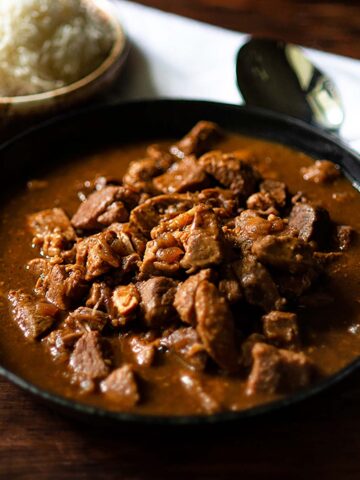
Another excellent pairing is Filipino Pork Adobo. The tender pork and rich, tangy soy-vinegar sauce complement the savory flavors of the Pancit Bihon.
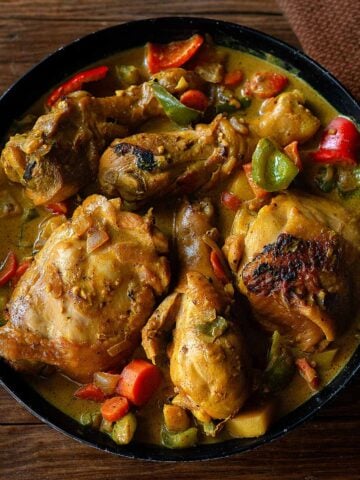
For a larger family-style dinner, serve the noodles alongside Filipino Chicken Curry. Its creamy, mildly spiced sauce offers a delicious contrast to the lighter noodles and vegetables.
You can also keep things simple with fresh lime or lemon wedges. A squeeze of citrus over the finished noodles brightens the dish and balances the rich, savory sauce.
Recipe FAQs
Pancit Bihon, also called Pancit Bihon Guisado or Gisado, is a Filipino noodle dish made with thin rice vermicelli, meat or seafood, vegetables, and a savory sauce.
The noodles are typically seasoned with ingredients such as soy sauce and broth, then combined with vegetables like cabbage, carrots, and green beans.
It's commonly served at Filipino family gatherings, celebrations, and special occasions, although it's just as delicious for an everyday dinner.
No, you don't have to soak bihon noodles before cooking them.
For this recipe, I add the dry rice vermicelli directly to the seasoned sauce and allow the noodles to absorb the liquid as they cook.
This eliminates the separate soaking step and gives the noodles an opportunity to absorb the flavors of the sauce.
The important thing is to use enough cooking liquid and gently separate the noodles as they soften.
Pancit Bihon is made with thin rice vermicelli noodles, often sold as Filipino bihon noodles.
They're typically made primarily from rice flour and have a delicate texture that absorbs the flavors of the cooking liquid.
Look for packages specifically labeled Bihon or thin rice vermicelli at an Asian grocery store.
Avoid substituting thicker rice noodles if you're trying to achieve the traditional texture of Pancit Bihon.
The biggest difference is the type of noodles used.
Pancit Bihon is made with thin rice vermicelli, giving it a lighter texture. Pancit Canton uses wheat-based egg noodles that are thicker and chewier.
Both dishes commonly include vegetables, meat or seafood, and savory seasonings, but the different noodles create noticeably different textures.
Bihon noodles absorb liquid quickly, so they can become dry or stick together if there isn't enough sauce in the wok.
When cooking the noodles directly in the sauce, make sure there's sufficient liquid for them to soften evenly.
If the liquid is absorbed before the noodles are tender, add a small amount of hot water and gently toss the noodles to distribute it.
Avoid cooking over excessively high heat once the noodles have been added, as the liquid can evaporate before the noodles finish cooking.
Mushy Pancit Bihon is usually the result of overcooking the noodles or adding more liquid than they need.
Thin rice vermicelli softens quickly, so begin checking the texture as soon as the noodles become flexible.
Once they're tender and most of the sauce has been absorbed, remove the wok from the heat.
Remember that the noodles will continue absorbing some moisture as the dish rests.
Absolutely! You can leave out the shrimp and make this recipe with chicken only.
You can also substitute thinly sliced pork or use a combination of meats, depending on your preference.
The rice noodles, vegetables, and savory sauce provide plenty of flavor even without shrimp.
Yes, but you'll need to make a few substitutions.
Omit the chicken and shrimp, and replace the chicken bouillon with vegetable bouillon.
You'll also need to substitute the oyster sauce with a vegetarian mushroom-based stir-fry sauce.
Add extra vegetables or tofu for a more substantial dish, and check that the noodles and other seasonings meet your dietary preferences.
Yes. You can substitute chicken broth or stock for the water and chicken bouillon in the sauce.
Choose a lower-sodium broth if possible, since the soy sauces and oyster sauce already contribute plenty of salt.
Taste the finished noodles before adding any additional seasoning.
Yes! Pancit Bihon can be prepared ahead of time, making it a convenient option for parties, family gatherings, and meal preparation.
Keep in mind that the rice noodles will continue absorbing moisture as the dish sits, so they may become slightly drier after refrigeration.
When reheating, add a small splash of water or chicken broth to help loosen the noodles and restore their texture.
Allow the Pancit Bihon to cool promptly, then transfer it to an airtight container and refrigerate within two hours. Leftovers can be stored in the refrigerator for 3–4 days.
For the best results, reheat the noodles in a large skillet or wok over medium heat with a splash of water or chicken broth.
Gently toss until heated throughout to 165°F. You can also reheat individual portions in the microwave, adding a little liquid to prevent the noodles from drying out.
Yes, although the texture of the rice noodles and vegetables may change after freezing.
For the best quality, allow the dish to cool, transfer it to freezer-safe containers, and freeze promptly. Aim to use it within 1–2 months for the best texture.
Thaw it in the refrigerator overnight, then reheat thoroughly with a splash of water or broth.
Not necessarily.
Although rice vermicelli noodles are often made without wheat, this recipe contains soy sauce and oyster sauce, which may include wheat or other gluten-containing ingredients.
To make a gluten-free version, choose certified gluten-free rice noodles and verify that the soy sauces, oyster sauce substitute, and bouillon are all gluten-free.
Pancit is traditionally associated with long life and good fortune in Filipino culture, which is one reason noodle dishes are frequently served at birthdays and other celebrations.
The long noodles are often considered symbolic of longevity.
Pancit Bihon is also practical for gatherings because it can be prepared in large batches and served family-style.

More Recipes You'll Love


If you made this Pancit Bihon Recipe or any other of my recipes, please leave a Star Rating and let me know your thoughts in the comments below.
Don't forget to tag @chickenfriedkitchen on Instagram, Subscribe on YouTube, and Follow on Pinterest and Facebook! I'll see you there!
📖 Recipe

Traditional Pancit Bihon
Ingredients
- 8 Oz Filipino Bihon Noodles
- ½ lb Chicken Breast - thinly sliced
- ½ lb Small Shrimp - deveined/tail-off
- 8 Oz Fresh Green Beans - sliced
- 1 Whole carrot - diced, cubed, or shredded
- ½ Head of Cabbage - Sliced into chunks
- 1 Yellow Onion - finely diced
- 1 ½ tablespoon Minced Garlic
- ½ teaspoon Black Pepper
- ¼ teaspoon Salt
Pancit Sauce
- 1 tablespoon Chicken Bouillon Powder
- 3 tablespoon Dark Soy Sauce
- 2 tablespoon Soy Sauce
- 2 tablespoon Oyster Sauce
- 3 Cups Water
- 1 teaspoon Accent (Optional)
Extras
- Oil for Sautéing
Instructions
- Begin by combining all of your sauce ingredients in a mixing bowl. Give everything a good whisk until it's evenly combined, then set the sauce aside.
- Slice the chicken into thin, evenly sized strips.
- Shred the carrots, dice the onion, cut the green beans if they're too long, and slice up the cabbage.
- Heat a large wok over medium-high heat and add a little cooking oil.
- Add the sliced chicken and season it with salt and pepper, then stir-fry until it's cooked through.
- Once the chicken is fully cooked, remove it from the wok and transfer it to a mixing bowl.
- Now add a little more oil if necessary, and add the shrimp.
- Cook the shrimp until they're pink, opaque, and cooked through. Then remove them from the wok and add them to the bowl with the chicken.
- Add the green beans, onions, and carrots to the wok. Sauté everything until the vegetables begin to soften and the onions start turning translucent.
- Once the onions have softened, stir in the fresh minced garlic and Continue cooking just until the garlic becomes fragrant.
- Add the cabbage in batches, stirring each batch into the vegetables already in the wok.
- As the cabbage cooks, it'll begin to soften and shrink down, making room for more. Continue adding the cabbage until everything has been incorporated.
- Once all the vegetables are cooked to your liking, transfer them to a large mixing bowl and set them aside.
- Pour the sauce we prepared earlier directly into the wok and bring it to a boil.
- Begin adding the dry Pancit Bihon noodles and use a pair of small tongs to gently move the noodles around, separating them as they begin to soften.
- Continue gently stirring and separating the noodles until they're tender and have absorbed most of the sauce.
- Add the cooked chicken and shrimp back into the wok.
- Gently stir them into the noodles until they're evenly distributed and then start adding the cooked vegetables in batches.
- Continue working in batches until all the cabbage, carrots, green beans, and onions are evenly incorporated.
- Once everything is combined and heated through, turn off the heat and serve with fresh lime wedges.
Video

Phil says
Excellent Recipe... Thank you very much!!!
Jeremy Klae says
Thank you, Phil. I'm glad you liked it and thank you as well for taking the time to leave a comment. I always love hearing how the recipes turned out for you. If you liked this one try the Chicken Mei Fun too. Its similar but also very very good.