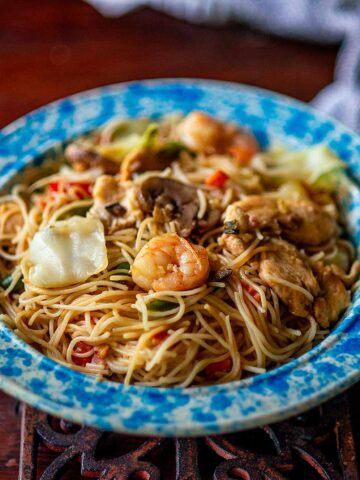
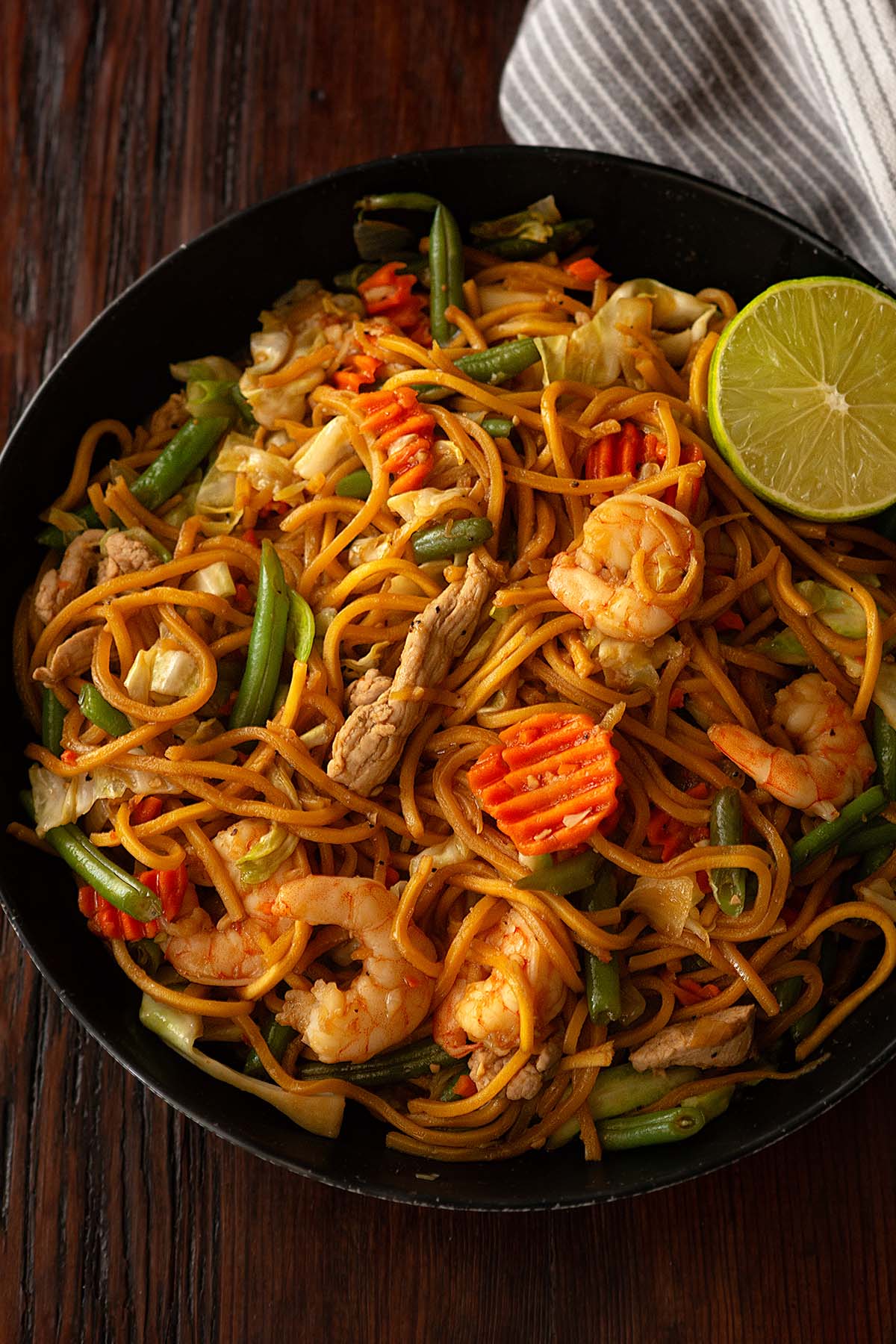
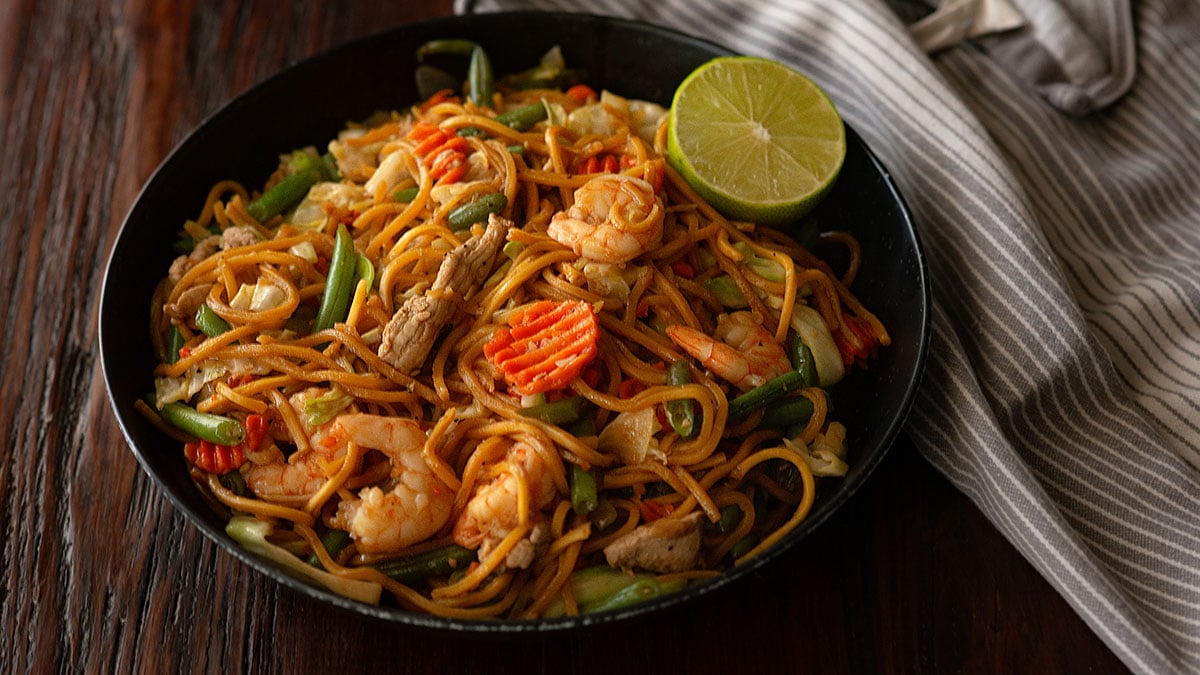
Quick Take: This Pancit Canton is a Filipino stir-fried noodle dish loaded with thinly sliced pork tenderloin, shrimp, cabbage, green beans, and carrots, all tossed with perfectly cooked egg noodles in a savory soy and oyster sauce. Cooking the dried noodles right in the chicken stock and sauce, instead of boiling them separately, is what lets them soak up all that flavor and keeps the sauce clinging to every bite.
If you've made my Pancit Bihon, you'll notice some similarities, but the noodles make these two dishes very different. Pancit Canton uses thicker, chewier egg noodles, where Pancit Bihon uses thin rice noodles. The sauce here combines dark and light soy sauce, oyster sauce, chicken bouillon, and just enough brown sugar to balance everything out.
Serve it with fresh lime wedges at the table so everyone can add a squeeze of citrus just before digging in.

Jump to:
Ingredients
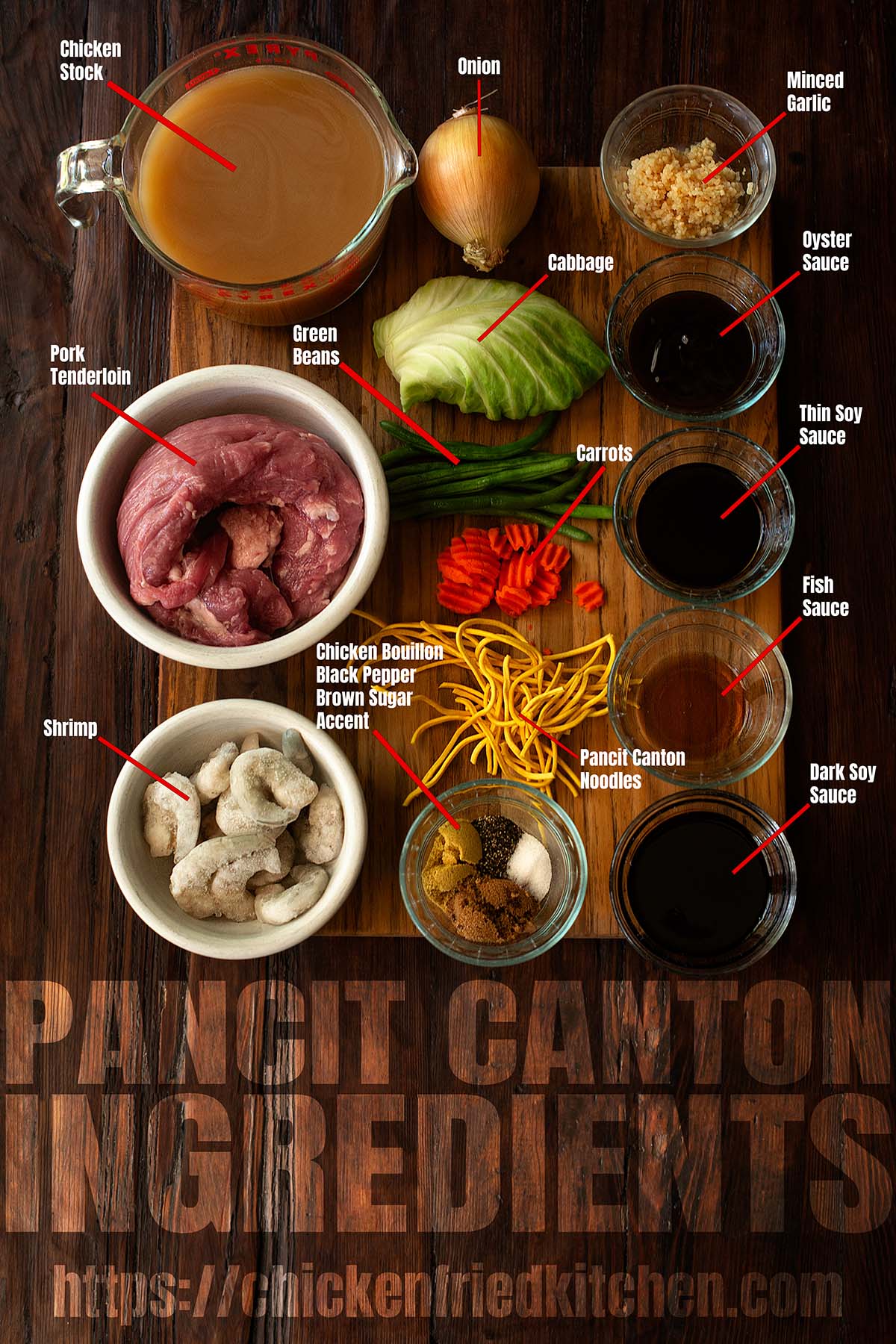
For the Pancit Canton
- Pancit Canton Noodles – 16 ounces of dried egg noodles. These thicker noodles give the dish its chewy texture and set it apart from rice-noodle dishes like Pancit Bihon.
- Yellow Onion – One diced onion provides the savory foundation for the vegetables and sauce.
- Garlic – Two tablespoons, minced, add plenty of aromatic flavor.
- Shrimp – One pound adds a second protein and works especially well with the savory sauce and vegetables.
- Pork Tenderloin – One pound, sliced into thin strips. Cutting the pork thinly helps it cook quickly and gets some pork into just about every serving.
- Cabbage – One head, chopped. It cooks down considerably and adds texture while soaking up the sauce.
- Fresh Green Beans – Sixteen ounces add color and a fresh, crisp texture.
- Carrots – Crinkle-cut sliced carrots add a little sweetness, texture, and color.
- Chicken Stock – Four cups provide the liquid for cooking the noodles while adding more flavor than water alone.
For the Pancit Sauce
- Chicken Bouillon Powder – One tablespoon intensifies the savory chicken flavor of the sauce.
- Brown Sugar – One tablespoon adds just enough sweetness to balance the salty and savory ingredients.
- Dark Soy Sauce – Six tablespoons provide deep color and a richer soy flavor.
- Light Soy Sauce – Four tablespoons add saltiness and soy flavor without relying entirely on dark soy sauce.
- Oyster Sauce – Four tablespoons add a rich, savory depth.
- Fish Sauce – One teaspoon adds another layer of savory, umami flavor and extra depth to the Pancit sauce without overpowering the other ingredients.
- Accent – One teaspoon enhances the savory flavors already present throughout the dish.
- Black Pepper – One teaspoon provides a little warmth and seasoning.
To Serve
- Lime Wedges – Serve alongside the finished Pancit Canton for squeezing over individual portions.
Step-by-Step Instructions
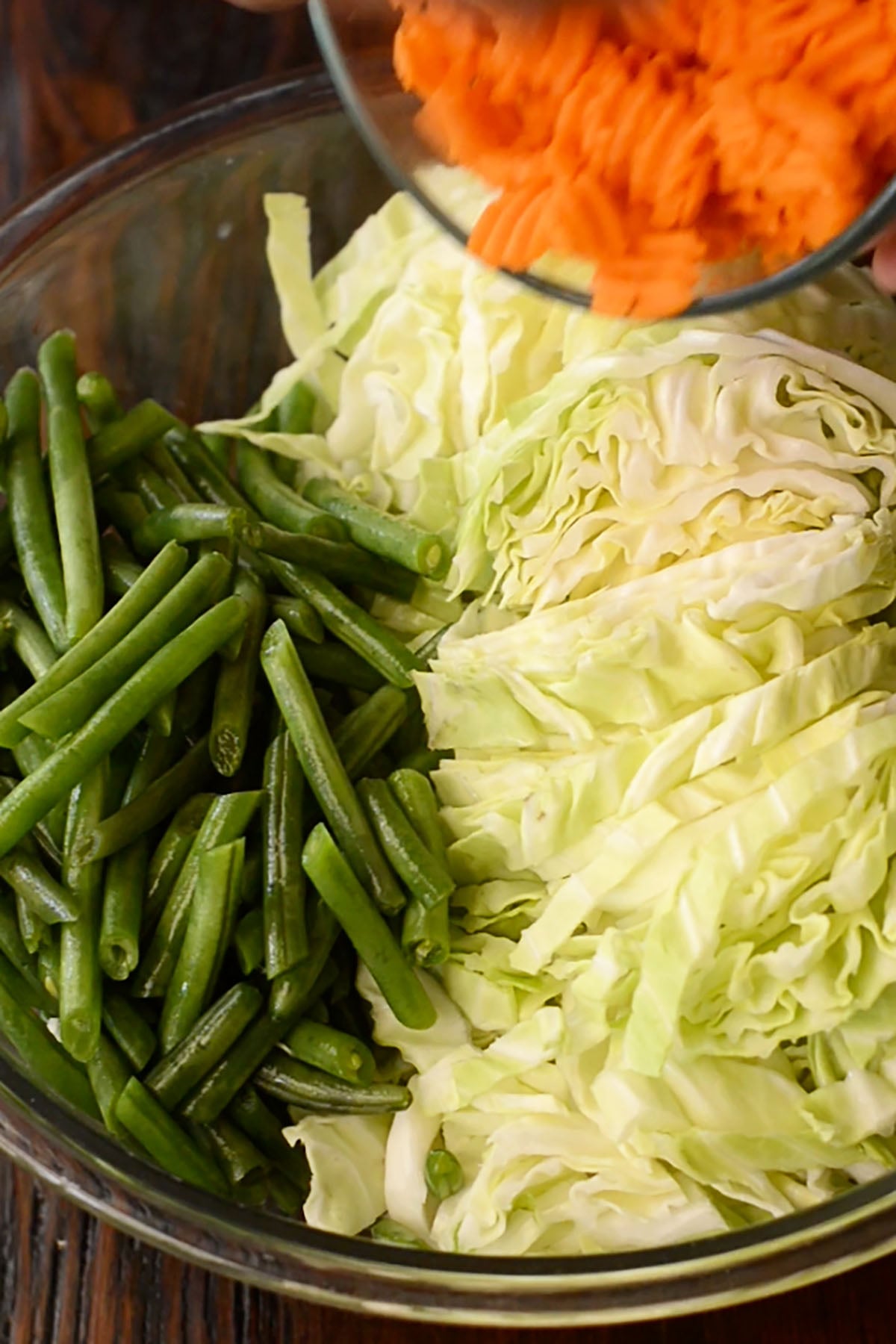
Step 1: Prep the Ingredients
Begin by prepping all of the vegetables.
Chop the onion, slice the green beans, and cut the cabbage into strips.
I like using crinkle-cut carrots for this recipe, but you can cut them however you’d like—or just save yourself some time and buy the carrots already crinkle cut.
Set the onions aside in their own bowl, then combine the cabbage, carrots, and green beans in a separate mixing bowl.
Now slice the pork tenderloin into thin, evenly sized strips.
Keeping the pieces fairly uniform helps them cook quickly and evenly, which is exactly what we want when working with the high heat of a wok.
And before we start cooking, this is one of those recipes where having everything prepped ahead of time really matters.
Once that wok gets hot and we start adding ingredients, things move pretty quickly.
You don’t want to be chopping cabbage while your pork is cooking.
So get everything sliced, measured, and ready to go before you start.
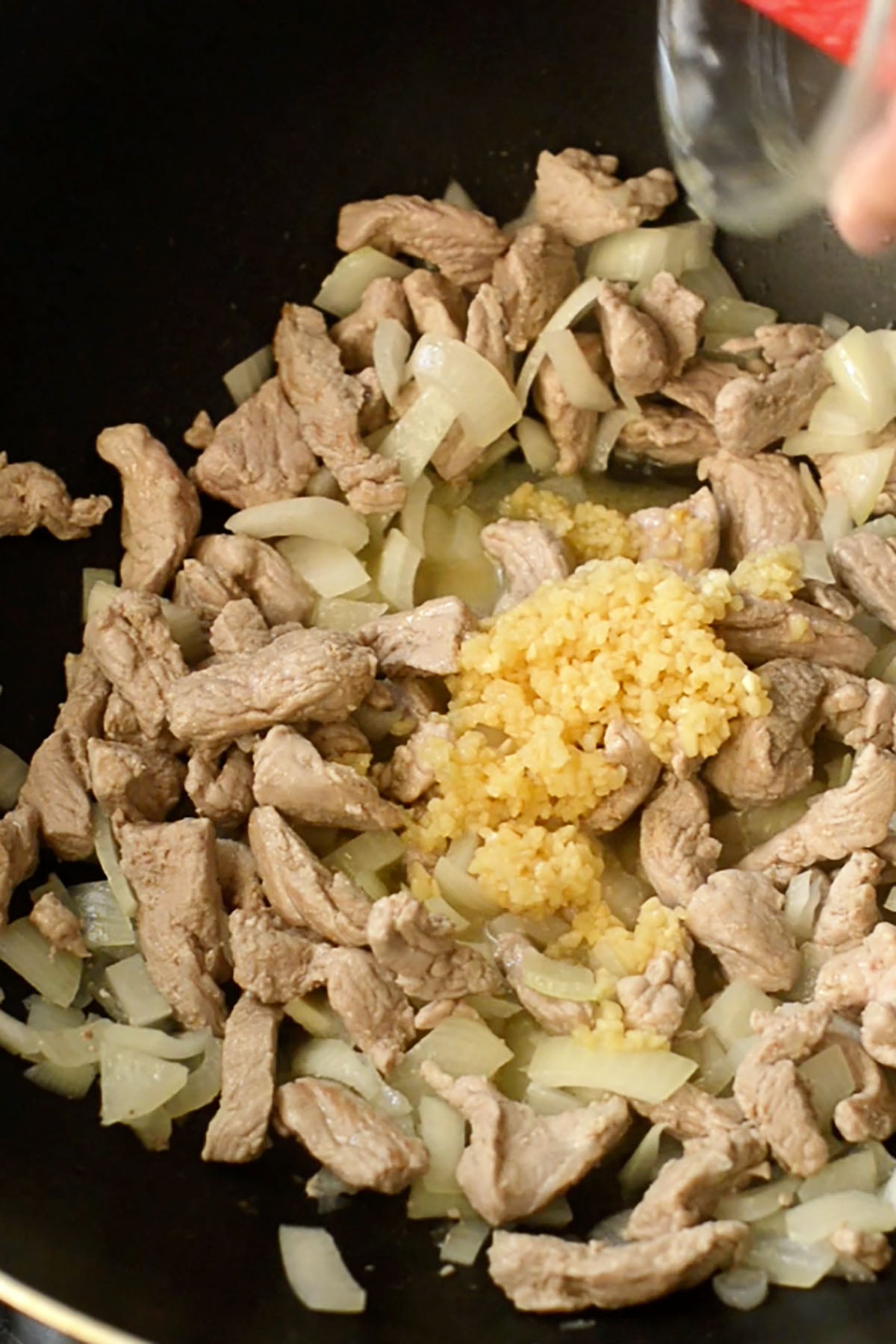
Step 2: Cook the Pork and Onions
Now heat a wok over medium-high heat and add a little cooking oil.
Once the oil is hot, add the pork tenderloin strips.
Sauté the pork until it’s cooked through and you no longer see any pink.
Then add the onions and continue cooking just until they begin to soften.
Once the onions have softened, add the fresh minced garlic.
Stir it into the pork and onions and let it cook for another minute or two, just until that garlic becomes fragrant.
Step 3: Cook the Vegetables & Shrimp
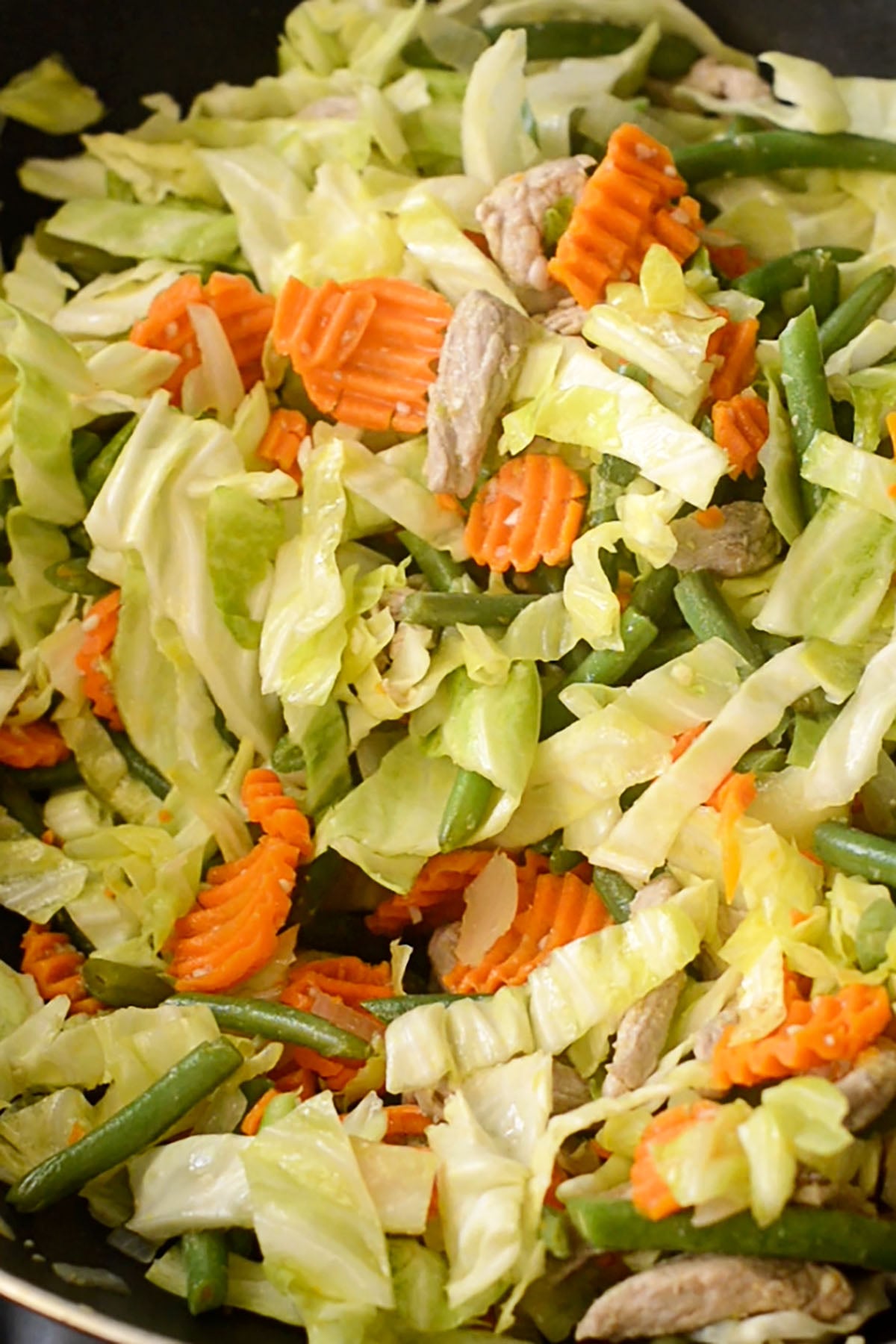
Now we’re going to start adding the cabbage, carrots, and green beans.
I like doing this in batches rather than dumping everything into the wok at once.
Add a handful or two of vegetables and stir them into the pork and onions.
As they cook, they’ll begin to soften and make room for more.
Continue working in batches until all of the vegetables have been incorporated.
But don’t take them too far.
I especially don’t want the cabbage completely wilted down.
I like keeping some texture in those vegetables so the finished Pancit Canton has a little bite instead of everything being soft.
Once the vegetables are where you want them, transfer the pork and vegetable mixture to a large mixing bowl and set it aside.
Add a little more oil to the wok and then add the shrimp.
Cook the shrimp just until they’re pink and cooked through.
Once they’re done, transfer them to the same bowl with the pork and vegetables.
Step 4: Build the Sauce
Now it’s time to build our sauce and cook the noodles.
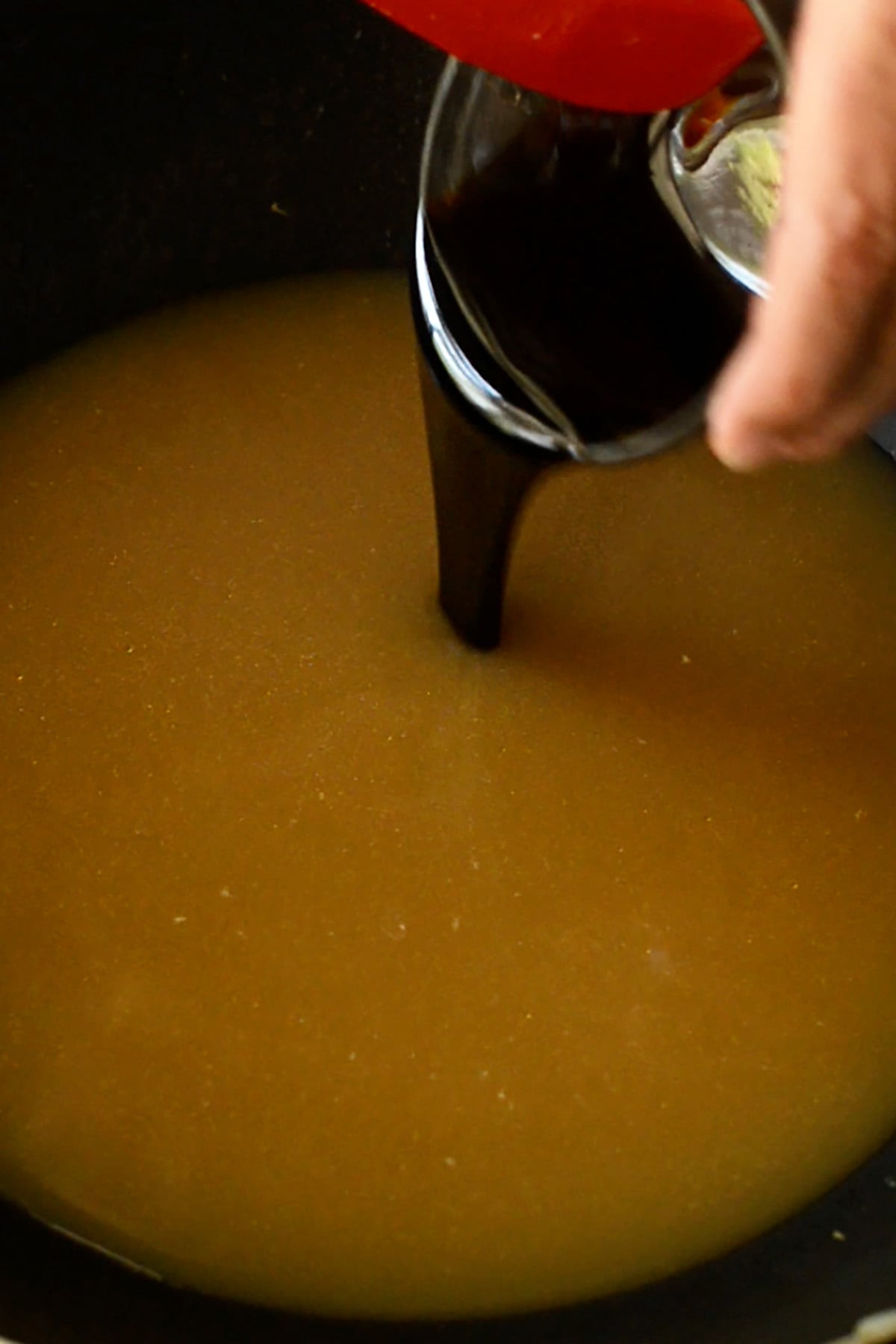
Pour the chicken stock directly into the wok.
Then add the oyster sauce, dark soy sauce, thin soy sauce, fish sauce, brown sugar, chicken bouillon powder, black pepper, and Accent.
Give everything a good whisk until the sauce is completely combined.
Now bring the sauce up until it’s steaming.
Step 5: Cook the Noodles
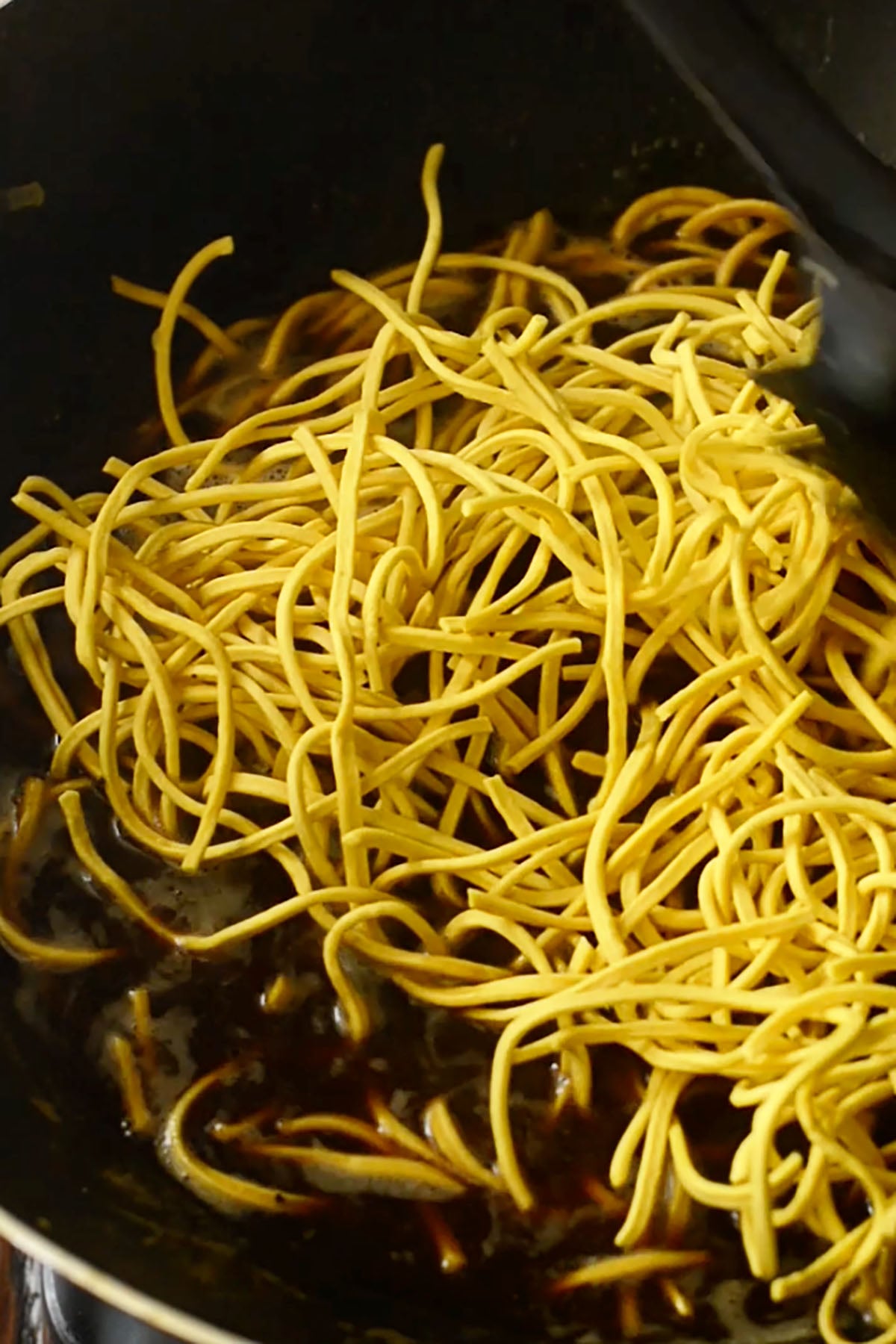
Once you have plenty of steam coming off the sauce, begin adding the Pancit Canton noodles in batches.
As the noodles hit that hot liquid, they’ll begin to soften.
And this is one of my favorite things about making Pancit Canton this way.
We aren’t boiling the noodles in a separate pot of water and then adding flavor afterward.
The noodles are actually cooking in the sauce.
So as they soften, they’re soaking up all of that flavor from the chicken stock, oyster sauce, soy sauces, fish sauce, and seasonings.
I start with the sauce steaming rather than aggressively boiling because I want the noodles to have time to soften and absorb that liquid without overcooking.
As each batch begins to soften, gently work the noodles into the sauce and add some more.
And if it looks like you have way too much liquid in the wok right now, don’t panic.
Trust me on this one.
Those noodles are going to absorb quite a bit of that sauce as they cook, and whatever remains is going to help coat the pork, shrimp, and vegetables once we bring everything back together.
Continue adding and gently stirring the noodles until they’re all incorporated and the sauce eventually comes up to a boil.
Periodically check the texture as they cook.
What I’m looking for is something similar to al dente pasta.
The noodles should be tender but still have a little bite.
You don’t want to cook them until they become overly soft because they’re going to continue cooking as we finish the dish.
Step 6: Finish the Pancit Canton
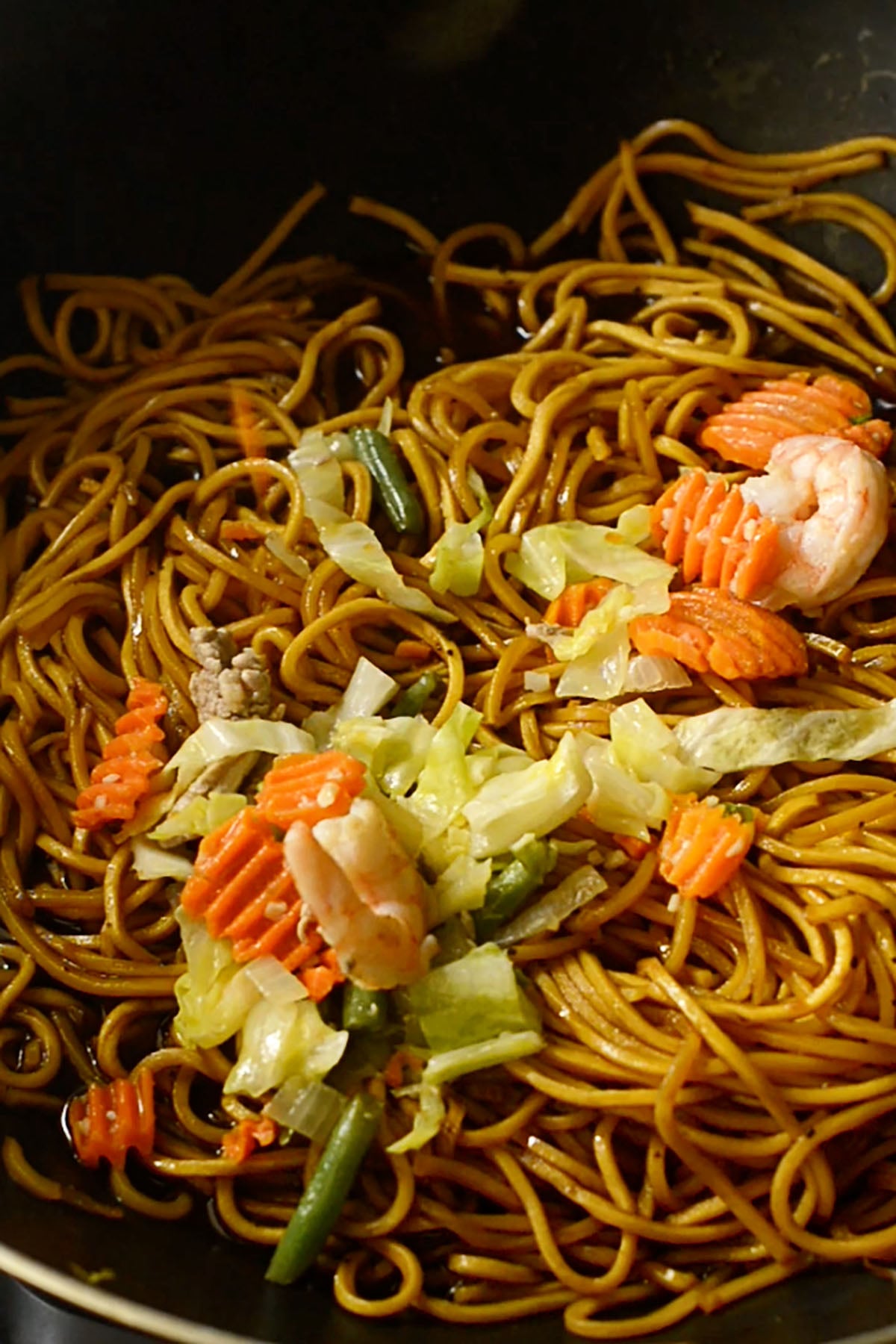
As soon as the noodles reach that texture, start adding the pork, shrimp, and vegetable mixture back into the wok.
Again, I like doing this in batches.
Adding a little at a time helps separate the noodles and makes it much easier to fold everything together without tearing them apart.
Keep gently folding until all of the pork, shrimp, and vegetables are evenly distributed throughout the noodles.
And remember that extra sauce we had earlier?
Now it has somewhere to go.
It coats the noodles, vegetables, shrimp, and pork, bringing everything together into one finished dish.
That’s exactly what we’re looking for.
Savory noodles that have absorbed the sauce, tender pork and shrimp, and vegetables that have softened but still have enough texture to stand out.
Serve your Pancit Canton hot with fresh lime wedges on the side.
Expert Tips
Have everything ready before you start cooking. Pancit Canton moves quickly once you begin. Slice your meat, prepare the vegetables, and mix the sauce beforehand so you aren’t trying to prep ingredients with food already in the wok.
Slice the pork thinly. Thin strips of pork tenderloin cook quickly and are much easier to distribute throughout the noodles.
Don’t overcook the shrimp. Cooking the shrimp separately and returning them near the end gives you much more control over their texture.
Give the vegetables some texture. You don’t want to cook the green beans, carrots, and cabbage until they’re completely soft. A little texture creates a much better finished dish.
Let the noodles absorb the flavor. Cooking the Pancit Canton noodles in the chicken stock and sauce allows them to soak up all that savory flavor rather than simply coating already-cooked noodles with sauce.
Serve the lime at the table. A squeeze of fresh lime over the finished noodles provides acidity that cuts through the rich, savory sauce.
What to Serve with Pancit Canton
Pancit Canton is hearty enough to serve as a complete meal, but it’s also perfect as part of a larger spread with a few appetizers and finger foods on the side. I especially like serving it with something crispy to contrast with the saucy noodles.
My Dynamite Lumpia is a great choice, with crispy wrappers, a creamy filling, and just enough heat to complement the savory Pancit Canton. You could also serve it with my Shrimp Toast. It’s not traditionally Filipino, but the crispy fried bread and savory shrimp topping pair really well with the pork, shrimp, and vegetables in this dish.
Add some fresh lime wedges to the table, and you’ve got an easy meal that’s great for sharing with family or a crowd.
Recipe FAQs
Pancit Canton is a Filipino noodle dish made with wheat-based egg noodles that are stir-fried with vegetables, meat or seafood, and a savory sauce. There are many variations, and the proteins and vegetables can differ considerably from one version to another.
The biggest difference is the noodles. Pancit Canton uses thicker wheat-based egg noodles, while Pancit Bihon uses thin rice noodles. That gives Canton a chewier, more substantial texture, while Bihon is considerably lighter and thinner.
Pancit Canton can be made with different proteins. This recipe uses both thinly sliced pork tenderloin and shrimp, giving you a combination of meat and seafood throughout the noodles.
Yes. If you don’t care for shrimp, you can leave it out and make the dish with pork tenderloin alone. Because this recipe already contains a full pound of pork, you’ll still have plenty of protein.
Unlike Pancit Bihon’s rice noodles, Pancit Canton noodles are wheat-based egg noodles. They’re thicker and have a chewier texture that holds up particularly well with the meat, vegetables, and sauce in this recipe.
Overcooking the noodles or leaving too much liquid in the pan can result in softer noodles. Keep an eye on them as they absorb the chicken stock and sauce, tossing them gently and stopping once they’ve reached the texture you’re looking for.
More Recipes You'll Love


If you made this Pancit Canton recipe or any other of my recipes, please leave a Star Rating and let me know your thoughts in the comments below.
Don't forget to tag @chickenfriedkitchen on Instagram, Subscribe on YouTube, and Follow on Pinterest and Facebook! I'll see you there!
📖 Recipe
Pancit Canton
Equipment
- 1 Wok
Ingredients
For the Pancit
- 16 oz pancit canton dried egg noodles
- 1 yellow onion diced
- 2 tablespoon fresh minced garlic
- 1 lb Shrimp
- 1 lb pork tenderloin sliced into thin strips
- 1 head of cabbage chopped
- 16 Oz Fresh Green Beans cut into pieces
- 4 Cups Chicken Stock
- 4 Whole Carrots crinkle cut
Pancit Canton Sauce
- 1 tablespoon chicken Bouillon Powder
- 1 tablespoon Brown Sugar
- 6 tablespoon Dark Soy Sauce
- 4 tablespoon Thin Soy Sauce
- 4 tablespoon Oyster Sauce
- 1 teaspoon Fish Sauce
- 1 teaspoon Accent optional
- 1 teaspoon Black Pepper
- Lime wedges for serving
Instructions
- Chop the onion, slice the green beans, and cut the cabbage into strips.
- Set the onions aside in their own bowl, then combine the cabbage, carrots, and green beans in a separate mixing bowl.
- Slice the pork tenderloin into thin, evenly sized strips.
- Heat a wok over medium-high heat and add a little cooking oil.
- Once the oil is hot, add the pork tenderloin strips, sautéing until it’s cooked through and you no longer see any pink.
- Add the onions and continue cooking just until they begin to soften.
- Once the onions have softened, add the fresh minced garlic and stir it into the pork and onions and let it cook for another minute or two, just until that garlic becomes fragrant.
- working in batches, add the cabbage, carrots, and green beans and cook until they have softened but don't wilt the cabbage. Leaves some texture there.
- Remove the mixture form the wok to a large mixing bowl and set it aside.
- Add a little more oil to the wok and cook the shrimp until cooked through and then add the shrimp to the veggie and pork bowl.
- Pour the chicken stock directly into the wok, then add the oyster sauce, dark soy sauce, thin soy sauce, fish sauce, brown sugar, chicken bouillon powder, black pepper, and Accent.
- Give everything a good whisk until the sauce is completely combined and bring the sauce up until it's steaming.
- Once you have plenty of steam coming off the sauce, begin adding the Pancit Canton noodles in batches.
- As each batch begins to soften, gently work the noodles into the sauce and add some more until all of the noodles have been placed in the sauce.
- Periodically check the texture as they cook until they resemble an al dente pasta.
- As soon as the noodles reach that texture, start folding the pork, shrimp, and vegetable mixture back into the wok until everything is evenly distributed and coated in the remaining sauce.
- Serve your Pancit Canton hot with fresh lime wedges on the side.
Video